


When life happens on the floors of a home—spilled drinks, wet shoes from a rainy afternoon in Castle Hayne, or splashes from a busy kitchen—moisture protection quickly becomes a top priority. Laminate flooring has evolved significantly over the years, and today’s options often include either water-resistant or waterproof technology.
At first glance, the two can sound nearly identical. However, the performance difference can be substantial depending on where the flooring is installed and how the space is used. Understanding what sets waterproof laminate apart from water-resistant laminate helps homeowners across Wilmington, Leland, Hampstead, and nearby communities make confident, long-term decisions.
Everyday moisture vs standing water
Water-resistant laminate is designed to handle everyday spills and light moisture. If a glass tips over or a pet bowl splashes, the surface layer and tightly locked seams help prevent immediate absorption. The key word here is resistance. These floors buy time. When spills are wiped up promptly, damage is typically avoided.
Waterproof laminate, on the other hand, is engineered to withstand standing water for extended periods. This is especially helpful in areas where moisture exposure is more frequent or unpredictable, such as kitchens, laundry rooms, or entryways near the coast.
What makes laminate water-resistant?
Traditional laminate flooring consists of multiple layers: a protective wear layer, a decorative image layer, a high-density fiberboard (HDF) core, and a backing layer. In water-resistant products, manufacturers enhance the top layer and locking mechanism to slow water intrusion.
The seams between planks are often treated with special coatings or waxes. These create tighter seals, reducing the likelihood that moisture will seep into the core. However, if water sits too long, it can eventually work its way through the seams and cause swelling.
In living rooms, bedrooms, and hallways—spaces where moisture exposure is minimal—water-resistant laminate can be an excellent and practical choice. It provides durability, style, and peace of mind without necessarily requiring the highest level of moisture defense. Exploring different styles and guidance on laminate flooring can help clarify which construction type best fits the intended room.
Inside a waterproof laminate plank
Waterproof laminate takes things further. The biggest difference usually lies in the core construction. Instead of standard HDF that may swell when exposed to water, waterproof versions use upgraded cores that resist expansion. Some products also feature tighter, more advanced click-lock systems that create a near-impermeable seal between planks.
This construction allows waterproof laminate to handle standing water for significantly longer periods without warping. That makes it a strong candidate for active households, especially in coastal North Carolina where humidity and sandy, wet shoes are common.
Where each option performs best
Choosing between waterproof and water-resistant laminate often comes down to placement and lifestyle.
Bedrooms and formal living spaces
In low-moisture areas, water-resistant laminate typically performs beautifully. These rooms rarely experience significant spills or standing water, so the added investment in full waterproof technology may not always be necessary.
Kitchens and laundry rooms
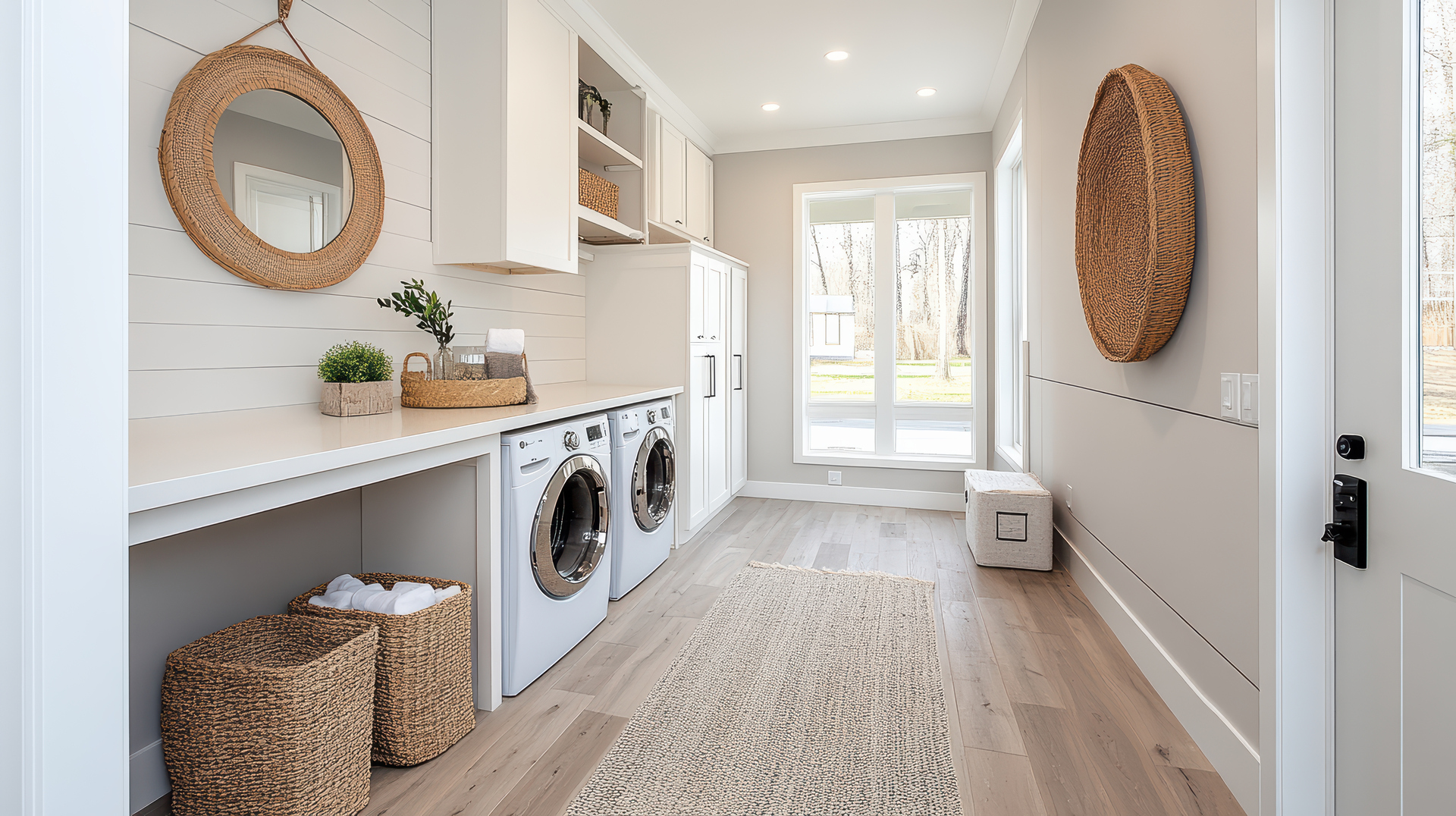
Kitchens are high-traffic, high-risk zones. Between cooking, dishwashing, and occasional appliance leaks, moisture exposure is more likely. Waterproof laminate offers added security in these environments. The same goes for laundry rooms, where water lines and appliances increase the potential for unexpected spills.
Coastal entryways and mudrooms
In Wilmington and nearby beach communities, floors often encounter sand, damp towels, and rain-soaked shoes. Waterproof laminate provides an extra layer of confidence in these transition areas. Its enhanced core structure resists swelling even when moisture lingers a bit longer than expected.
Bathrooms and heavy moisture zones
While waterproof laminate performs better than water-resistant options, bathrooms still require careful consideration. For spaces with consistent humidity or direct water exposure, some homeowners may prefer exploring alternative surfaces such as tile flooring, which naturally handles water and humidity with ease.
Installation and maintenance considerations
Both waterproof and water-resistant laminate benefit from proper installation. Subfloor preparation, correct underlayment, and precise plank locking all influence long-term performance. Even the most advanced waterproof system can underperform if seams are not secured correctly.
Maintenance is similar for both types. Spills should still be cleaned promptly. Although waterproof laminate tolerates standing water longer, it is never ideal to let moisture sit indefinitely. Regular sweeping and damp (not soaking) mopping help maintain the integrity of the floor.
Humidity control also plays a role. While coastal climates bring natural moisture to the air, maintaining consistent indoor humidity levels supports dimensional stability and overall floor longevity.
Cost differences and long-term value
Waterproof laminate generally carries a higher price point due to upgraded core materials and engineering. However, in moisture-prone areas, that additional investment can prevent costly repairs or replacements down the road.
Water-resistant laminate offers excellent value in drier rooms, delivering style and resilience at a more moderate price range. The key is aligning the product with the room’s specific demands rather than applying the same solution throughout the entire home.
Design options remain equally impressive
Both waterproof and water-resistant laminate come in a wide range of realistic wood looks, textures, and plank sizes. Advancements in imaging technology mean there is no need to sacrifice style for performance. Whether the goal is a warm coastal oak aesthetic or a modern gray-toned finish, both categories offer beautiful options.
Matching the right protection to the right space
Selecting between waterproof and water-resistant laminate is less about which is “better” and more about which is appropriate for the space. Bedrooms, offices, and formal living areas may thrive with water-resistant construction. Kitchens, entryways, and active family zones often benefit from the added security of waterproof technology.
At Barefoot Flooring, Inc., we believe every home deserves flooring that feels as welcoming as the family living in it. As a local flooring company serving Wilmington, Castle Hayne, Leland, Hampstead, and surrounding communities, we take pride in helping our neighbors compare options side by side and choose what truly fits their lifestyle. From our showroom to our professional installation team, we are committed to quality products, efficient service, and craftsmanship that lasts. Connect with us through our contact us page and let our flooring experts guide the next step.


